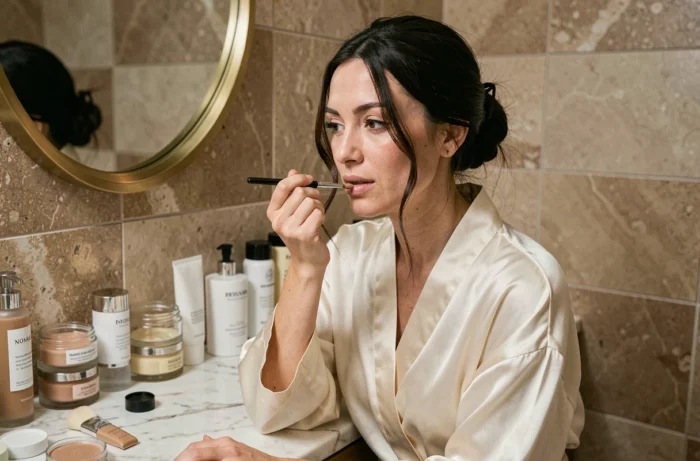
The European beauty market is undergoing a phase of accelerated transformation. Two European regulations, one on microplastics and the other on environmental claims, are reshaping brand formulations and messaging. These regulatory constraints are significantly altering the beauty products available on shelves, the textures offered, and the promises displayed on packaging.
Microplastics in cosmetics: what the European regulation changes
Regulation (EU) 2023/2055 imposes a precise timeline for the removal of intentionally added microplastics in cosmetics. The deadlines span several years and affect different product categories at each stage.
- Starting from October 2027, rinse-off products (facial cleansing gels, shower gels, shampoos, scrubs) must be reformulated without microplastics
- Starting from October 2029, leave-on products (creams, lotions, body milks) and formulas containing encapsulated fragrance substances will be affected
- Colored cosmetics, lipsticks, and nail polishes have a deadline until October 2035
This timeline directly impacts the textures that consumers are familiar with. “Blur” and soft-focus effects often rely on synthetic polymer particles. Microbead scrubs, already declining, will disappear completely from European formulations.
For brands, reformulation represents a technical challenge. Finding plant-based or mineral substitutes that replicate the same skin feel and visual effect takes time. Field feedback varies on this point: some pioneering brands claim to have found satisfactory alternatives, while others acknowledge a loss of sensory performance.
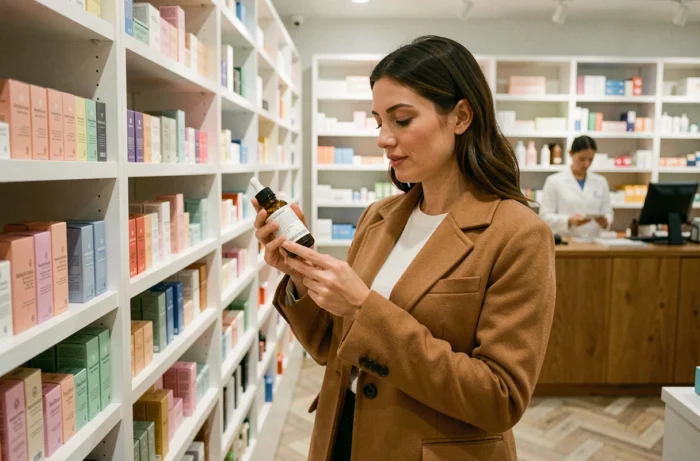
On Beauty Boo’s beauty page, product references are gradually integrating these new formulation constraints, allowing consumers to identify brands already committed to this transition.
Green claims and greenwashing: the directive coming into effect in September 2026
Directive (EU) 2024/825 changes the rules of the game for beauty brands’ marketing discourse. Starting from September 27, 2026, unsubstantiated environmental slogans will become illegal. A product can no longer claim to be “natural,” “eco-friendly,” or “planet-friendly” without precise and verifiable evidence.
In practice, vague mentions like “green formula” or “committed to nature” without recognized certification or measurable data are destined to disappear from packaging. This directive aims to protect consumers from systemic greenwashing in the cosmetics sector.
The impact on daily beauty routines is twofold. On one hand, the choice on shelves will become clearer: products genuinely formulated with natural origin ingredients will stand out. On the other hand, some low-cost “green” ranges may lose their main selling points if they cannot justify their claims.
Reading labels differently
The beauty routine also involves reading packaging. Third-party certifications (independent labels attesting to a composition or manufacturing process) will carry more weight in purchasing decisions. A certified label is worth more than a self-proclaimed slogan, and regulations are pushing in this direction.
The available data does not yet allow for measuring how many references will be withdrawn or reformulated on the French market. The first months of the directive’s application will provide a clearer picture.
Facial care routine: adapting gestures to new formulations
Reformulations related to microplastics are changing the texture of many facial care products. A moisturizer without synthetic polymers does not have exactly the same feel as a classic formula. The skin absorbs differently, and the visual finish may vary.
Testing a reformulated product over several days before judging remains the best approach. Initial impressions of a new texture do not always reflect the actual effectiveness of the care. A cream that seems less “silky” at first contact may provide equivalent or even superior hydration over time.
For makeup, the transition will be slower. Foundations, powders, and lip products benefit from a longer deadline before the ban on microplastics. However, brands that anticipate this deadline are already offering interesting alternatives in face and lip makeup.
Simplifying your routine without losing effectiveness
The regulatory context encourages virtuous simplification. Instead of piling on products, prioritizing multifunctional care with transparent compositions allows for better control over what is applied to the skin. A well-formulated facial cleanser, a moisturizer suited to one’s skin type, and sun protection cover the daily needs of most skin types.
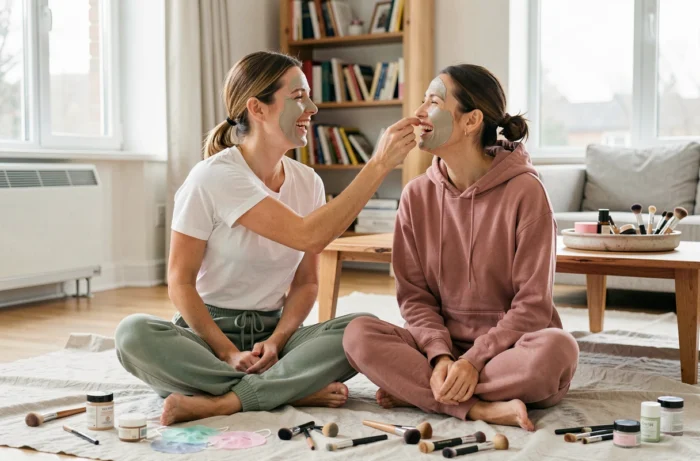
Fragrance and makeup: the most affected segments in the medium term
Fragrance substances encapsulated in microplastics, used to extend the longevity of a fragrance on the skin or in a cosmetic product, are among the categories targeted by the European regulation by 2029. The longevity of fragrances on the skin could evolve with the new formulations, without necessarily meaning a decrease in quality.
For lipsticks and nail polishes, the deadline extends to 2035. Manufacturers thus have time to develop alternatives. The first reformulated ranges arriving on the market show that natural pigments and plant-based binders are improving in performance, although discrepancies remain on certain shades or effects (metallic, intense glossy).
The makeup look of the coming years will be shaped as much by these technical constraints as by aesthetic trends. Consumers who follow new developments in makeup and fragrance should pay attention to both composition and visual effect.
These regulatory transformations, far from being mere administrative adjustments, are redefining everyday beauty products. The most useful tips in 2026 will no longer focus solely on the gesture or color, but on the ability to identify formulations that anticipate these changes without sacrificing the pleasure of use.