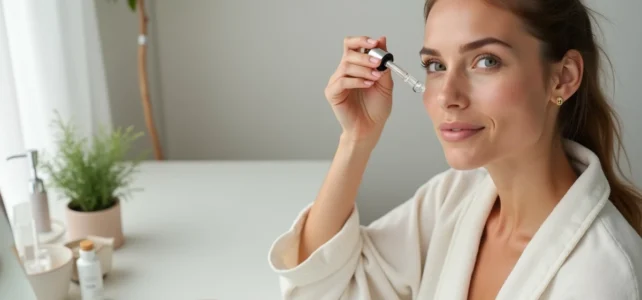
The beauty market is undergoing a rapid restructuring phase. Routines are simplifying, the boundaries between skincare and makeup are fading, and technology is making its way into gestures that were once purely cosmetic. This movement, visible for a few seasons, is gaining new momentum in 2026 with the emergence of hybrid products and personalized protocols that redefine daily habits.
Hybrid skincare makeup: the fusion of care and coverage that redefines the routine
The most significant trend at the moment has a name: skinification of makeup. The principle is simple. A foundation no longer just unifies the face; it incorporates moisturizing or anti-aging active ingredients directly into its formula.
Brands like Holissence, ADA Cosmetics, or those analyzed by La Revue du Luxe explicitly position this category as a priority development axis. The hybrid product is no longer a compromise between skincare and makeup; it aims for real effectiveness on both fronts.
For consumers, the interest is concrete: reducing the number of steps in the morning without sacrificing the quality of care. A tinted serum that protects and corrects could potentially replace a cream, a primer, and a foundation. This approach also aligns with what is documented in the beauty section of Le Site de Julia regarding the evolution of daily practices.
Field feedback diverges on one point: the coverage of these hybrid products satisfies those with light imperfections, but it remains insufficient for marked correction needs. Classic makeup does not disappear; it coexists with these new formulas.
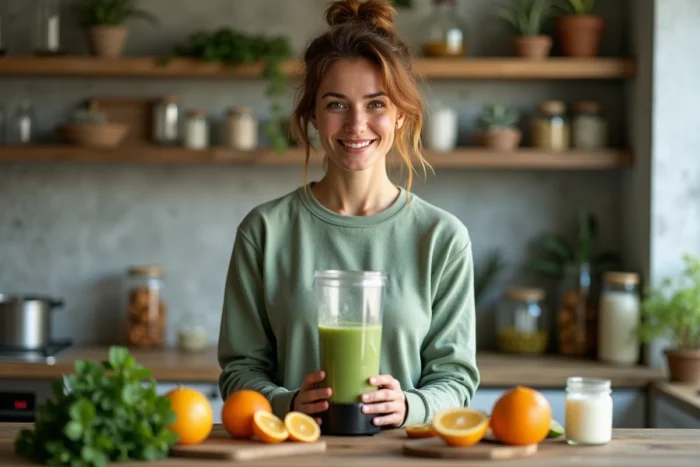
Minimalist beauty routine: fewer products, more targeted actives
The reduction of steps in a skincare routine is not new. What changes is the logic that governs it. We are no longer talking about eliminating products out of laziness or economy, but about selecting effective actives in a limited number.
Cosmeticary and Bougecheztoi document this evolution towards what they call the “minimum effective”: two or three targeted treatments replace a dozen overlapping layers. The idea is to adapt each gesture to a specific skin need (hydration, protection, radiance) rather than piling on textures.
The pillars of a streamlined routine
- A gentle cleanser, suitable for the skin type, used morning and evening to preserve the skin barrier without stripping it
- A serum concentrated on one or two actives maximum, chosen based on the primary need (hydration, even skin tone, firmness)
- A daily sunscreen, considered the most documented anti-aging gesture by dermatological literature
This approach requires a better understanding of one’s skin. A face mask or body scrub remains relevant, but as a weekly complement, not a daily gesture. The most effective routine is the one that targets precisely, not the one that multiplies steps.
Personalized beauty and technology: what smart tools change
Several recent sources mention the rise of so-called “smart” treatments. Skinobs notably discusses at-home photobiomodulation and AI-driven personalization as active research areas in the cosmetics industry.
In practice, some devices analyze the skin’s condition via an app and then recommend an adapted protocol. Others adjust the concentration of actives in a serum based on environmental parameters (pollution, humidity, season).
The available data does not yet allow for conclusions about the actual effectiveness of these tools compared to a classic dermatological diagnosis. Algorithmic personalization remains a developing field, promising but still poorly regulated in terms of clinical validation.
What is measurable, however, is the market’s appetite. Technological beauty attracts a clientele seeking objective results, not just sensory promises. Brands that document their results with transparent protocols gain credibility.
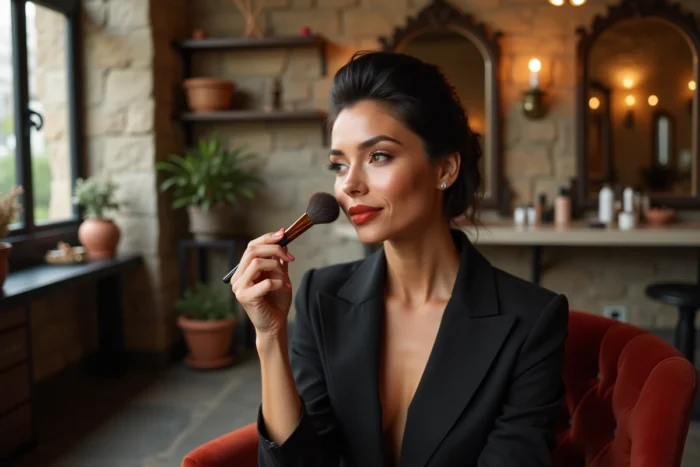
Sensorial beauty trends: the return of emotion in skincare
In contrast to technological beauty, another current is gaining momentum: that of sensory rituals. Skincare becomes a moment of well-being, not just a functional gesture. Enveloping textures, fragrances designed for their emotional effect, solid or refillable formats that change the physical relationship with the product.
This dimension does not appear in the most visible competing results, which remain focused on product lists or technical tutorials. Recent sources (Holissence, Lovves, My Jeriko) indicate, however, that consumers are seeking a holistic beauty experience, not just measurable performance.
What this changes for product choice
A body lotion chosen as much for its texture as for its actives. A lip balm whose scent contributes to an evening ritual. A treatment for nails or hands that transforms a utilitarian gesture into a sensory pause. Effectiveness is still expected, but it is no longer enough to differentiate a product.
However, this trend raises a question that the market has not yet resolved: how to objectively evaluate the emotional contribution of a cosmetic? Consumer feedback varies widely on this terrain, and no standardized protocol exists to measure the “well-being felt” during application.
The most enduring beauty tips are not those that follow a trend, but those that meet a real skin need and are sustainable over time. Whether the choice is a hybrid skincare-makeup product, a streamlined routine with three steps, or a complete sensory ritual, the selection criterion remains the same: the coherence between what the skin demands and what the product delivers.