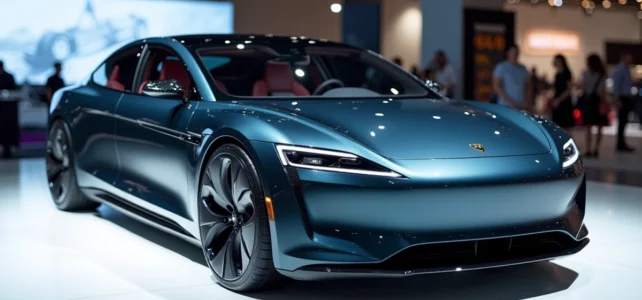
The year 2026 marks a clear shift in the product strategies of manufacturers. Technological breakthroughs are giving way to targeted variations, facelifts, and an energy diversification that goes beyond just the thermal/electric binary. We are observing an automotive market where the supply is fragmenting into fine segments rather than through major range revolutions.
Hydrogen Fuel Cell on the BMW X5: What a Fifth Powertrain Changes
BMW takes a significant step by announcing a five-powertrain offering including a hydrogen version for the new X5. The fuel cell is no longer limited to prototypes or captive fleets: it enters the catalog of a widely distributed SUV.
This strategy contrasts with the monolithic approach of some competitors who are betting everything on BEVs. Offering hydrogen, plug-in hybrid, mild-hybrid, thermal, and fully electric on the same platform involves a costly modular architecture, but it responds to a ground reality: fast charging infrastructures remain uneven across Europe, and the fuel cell offers a refueling time comparable to filling up with gasoline.
For enthusiasts following the evolution of alternative powertrains, it is possible to explore Le Blog Auto Mag to compare technical specifications as manufacturers announce new models.
The real signal here is not the technology itself, which has been known for years, but its integration into a high-volume model. We recommend keeping an eye on the pricing of this hydrogen version: if BMW manages to contain the additional cost, other premium brands could quickly follow suit.

LFP Batteries on European Models: A Discreet Industrial Shift
European manufacturers are gradually adopting LFP (lithium-iron-phosphate) chemistry on certain electric vehicles. This technology, long associated with Chinese brands for its lower costs, is gaining ground among mainstream manufacturers on the Old Continent.
LFP presents a different compromise compared to NMC (nickel-manganese-cobalt):
- Lower energy density, resulting in a heavier pack for the same capacity, but a significantly longer cycle life
- Wider thermal tolerance, reducing the risk of thermal runaway and simplifying the thermal management system of the pack
- Significantly lower production cost per kWh, allowing for economically viable entry-level vehicles
For an enthusiast, the choice of battery chemistry directly affects the daily experience. An LFP vehicle ideally charges to 100% without accelerated degradation, unlike NMC packs where the common recommendation remains to limit charging to 80%. This detail changes long trip planning.
Special Editions and Micro-Editions: The Urban Segment Reinvents Itself Without Major Launches
The French market for small urban cars is no longer renewing itself with entirely new models. Instead, we are seeing a multiplication of special series and thematic finishes targeting specific customer niches.
The Fiat Topolino illustrates this logic with a Sport finish and a limited edition Vilebrequin. Ford applies the same recipe to the Puma with the Black Edition and ST Edition variants, offered respectively in electric and hybrid versions. These special series focus on distinctive design and enhanced equipment levels rather than mechanical overhauls.
For urban car enthusiasts, this approach has a concrete advantage: it maintains the residual value of limited models while offering configurations that are unavailable in the standard catalog. The trap lies in paying a premium for purely cosmetic additions. We recommend systematically checking if the special series includes functional equipment (driver assistance, connectivity, specific upholstery) or just badges and wheels.
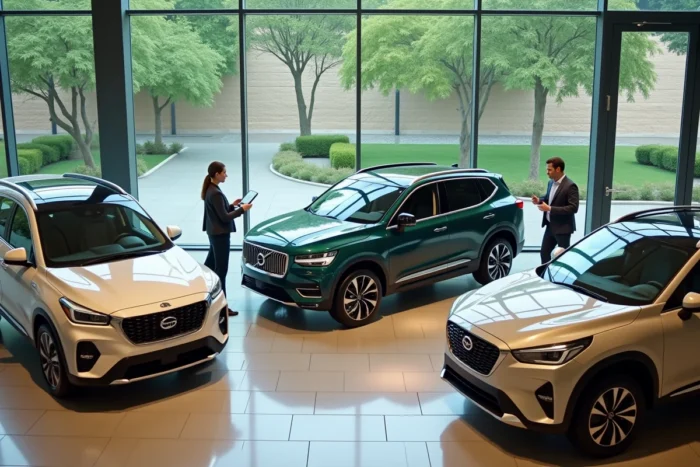
French New Releases 2026: Dominant Facelifts at Citroën, Peugeot, and Renault
The year 2026 will not be one of major breakthroughs for national brands. Clio, Twingo, C5 Aircross, restyled 408, and DS N°8 fall under commercial launch or evolution rather than a fundamental overhaul. Auto-Moto describes this period as relatively dull in terms of structural novelties for the French automotive industry.
However, Citroën is preparing a project that stands out: a future 2CV in the form of an electric city car, announced as accessible. This model, expected for the Paris Motor Show, aims to reactivate a myth while responding to regulatory pressure on emissions in urban areas.
The facelift strategy is not trivial. It allows manufacturers to extend the profitability of an existing platform while integrating software updates and design adjustments. For the used car market, this means that pre-facelift models will depreciate faster as soon as the refreshed version is officially announced.
- Restyled Peugeot 408: adjustments to the front end and integration of a new central screen, without platform changes
- Citroën C5 Aircross: price repositioning and revision of standard equipment to counter the Dacia Duster
- Renault Twingo: anticipated return in the form of an urban electric vehicle, a segment where the brand has been absent for several years
The Paris Motor Show remains the event to watch to confirm these directions. More than fifty new releases are expected, making it the most densely packed show of the year for vehicles intended for the European market.
The current year confirms an underlying trend: manufacturers are managing their ranges through rapid iterations rather than long cycles. For enthusiasts, this means following announcements at a faster pace, with each quarter bringing its share of variations, OTA updates, and limited series that gradually redefine the available offer.