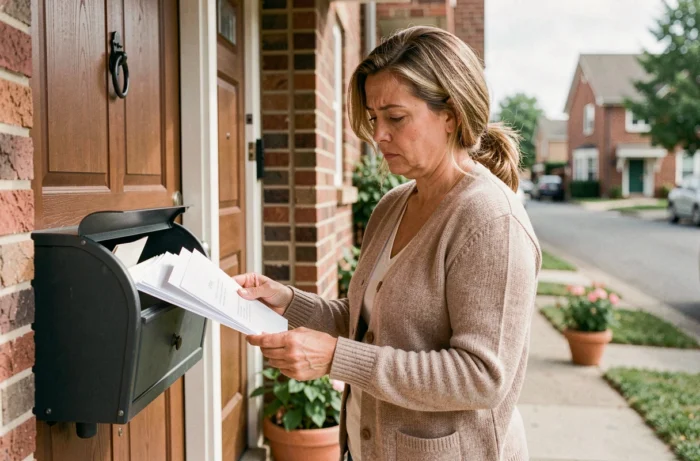
We move in, open the mailbox, and find letters addressed to someone we’ve never met. Follow-ups, sometimes formal notices, even bailiff summonses. The problem doesn’t go away by throwing the envelopes in the trash, and it won’t disappear on its own after a few months.
NPAI Mention on the Mail: The First Action to Take
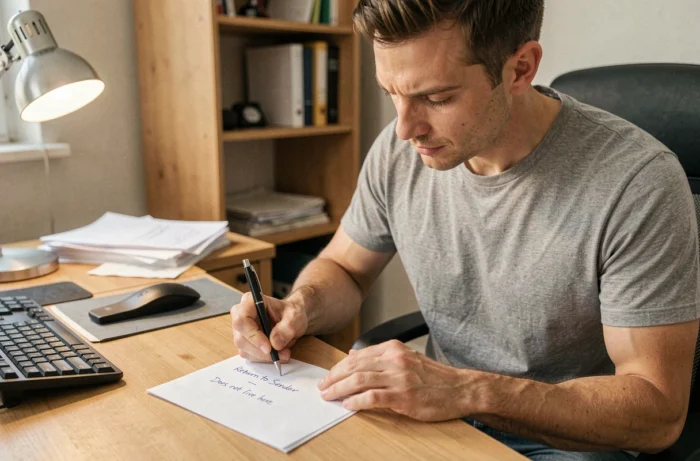
Before contacting anyone, the most straightforward action is to mark each envelope received and repost it. Clearly write “NPAI” (No Longer at This Address) or “Return to Sender – Addressee Unknown at This Address” on the envelope, without opening it. Then, drop it in a yellow La Poste mailbox.
La Poste has reminded that this NPAI return is free and covered by the regular postal system, even without postage from the recipient, as long as the envelope remains sealed and clearly marked. The sender retrieves their mail with the mention, indicating that the person is no longer (or never was) at that address.
You can also block mail from a stranger by combining this action with a direct approach at the local post office, which speeds up the update in the distribution system.
Why Never Open This Mail
Opening mail that is not addressed to you constitutes an offense under the penal code. The risk is real: if the envelope contains a formal notice or a bailiff’s document, having opened it could put you in a tricky situation, especially if the sender considers that the mail has been received.
If you have opened an envelope by mistake, seal it with tape, add the note “opened by mistake – NPAI,” and repost it. Returns vary on this point, but most postal workers handle these envelopes normally.
Label on the Mailbox: The Permanent Filter
Annotating envelopes one by one works, but it’s case-by-case handling. To cut off the flow at the source, clearly labeling the mailbox remains the most effective lever. La Poste explains that placing the full name of the new occupant allows for the system to register that the former occupant or unknown person does not reside there.
In practical terms, this means:
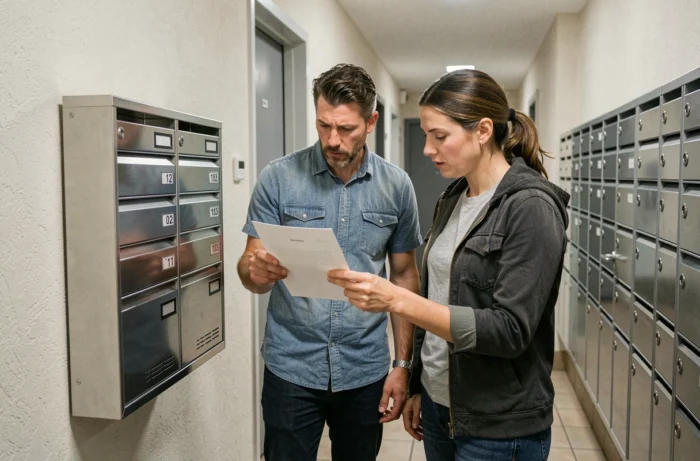
- Attach a label with your full name in uppercase, clearly visible, on the mailbox and on the intercom if you live in an apartment building
- Remove any label bearing a name that is not yours (former tenant, previous occupant)
- If you are in a co-ownership, ask the property manager to update the list of residents displayed in the lobby
The postal worker delivers mail based on the names present on the mailbox. Without an updated label, they have no way of knowing that the addressee does not live with you. An absent name from the mailbox should be enough to stop delivery, but in practice, it may take several weeks and a few NPAI returns for the system to adjust.
Reporting to the Post Office: When Returns Are Not Enough
If after several weeks of NPAI returns and a properly labeled mailbox, mail continues to arrive, you need to take active steps with La Poste.
Visit the Local Post Office
Go to the post office that serves your address (not just any post office). Bring proof of residence and explain the situation at the front desk. Explicitly request that the address be marked as NPAI for the name in question in the distribution system. This registration allows the postal worker to automatically reject any mail bearing that name at your address.
Some post offices also accept a request by free letter addressed to the distribution manager. Specify the full name of the person whose mail you are receiving, your exact address, and attach a copy of your ID.
Regarding Registered Mail
For registered letters, the situation is different. The postal worker leaves a delivery notice, and the envelope remains at the post office for a holding period. If you do not pick it up (which makes sense since it is not addressed to you), it will automatically be returned to the sender marked “unclaimed.” Never pick up a registered letter that does not bear your name, even out of curiosity.
Bailiff or Collection Mail at Your Address: The Trap to Avoid
The situation becomes complicated when envelopes come from collection agencies or bailiffs. Someone may be using your address intentionally to escape their creditors, or it could simply be an outdated address in a file.
In both cases, the process remains the same: do not open, mark NPAI, repost. In parallel, it may be useful to contact the sender directly (the bailiff’s office, for example) to inform them in writing that the person sought does not live and has never lived at your address. A simple letter is sufficient, with a copy of your proof of residence.
If the situation persists and you receive visits from a bailiff, keep a record of your NPAI returns (photos of the marked envelopes before posting them). This serves as proof of good faith in case of a dispute.
Summary of Actions to Take
- Mark each envelope “NPAI – addressee unknown at this address” without opening it, then repost it in a yellow mailbox
- Update the label on the mailbox with only the names of the actual occupants
- Visit the local post office to request the NPAI registration in the distribution system
- Contact recurring senders directly (bailiffs, agencies) to report the address error
- Never pick up a registered letter or open mail addressed to someone other than yourself
Most situations can be resolved by combining NPAI returns and correct labeling of the mailbox. When the mail comes from a collection agency, written notification to the sender speeds up the resolution. The postal worker, for their part, will eventually incorporate the change into their route, provided that the names displayed on the mailbox leave no ambiguity.