
Fashion and beauty trends: there is no shortage of terms to describe the key pieces of the autumn-winter 2026 season. But behind the colors, materials, and looks, a European regulatory framework is reshaping what brands can promise and display. Measuring the gap between the visual trends that dominate wardrobes and the constraints now weighing on brand communication allows for a better understanding of what “enhancing one’s style” concretely means this year.
European Regulation 2026 and Fashion Beauty Claims: What’s Changing
The European directive on “green claims,” applicable from September 27, 2026, prohibits generic environmental claims that are not supported by verifiable evidence. Self-created labels without recognized certification are banned, as are carbon neutrality claims based solely on offsetting.
For fashion and beauty brands, the impact is direct. Mentioning “eco-friendly” on a coat label or “natural” on a skincare product without precise data exposes them to penalties. Marketing vocabulary must rely on third-party certifications or measurable indicators.
On the cosmetic side, rules are tightening regarding ingredients and labeling. New ingredient restrictions are under review. Formulas must evolve without the promise of style or effectiveness disappearing, a fundamental exercise for brands closely following beauty trends. Analyses published on lestendancesdemya.fr regularly detail how these regulatory changes intersect with current aesthetic choices.
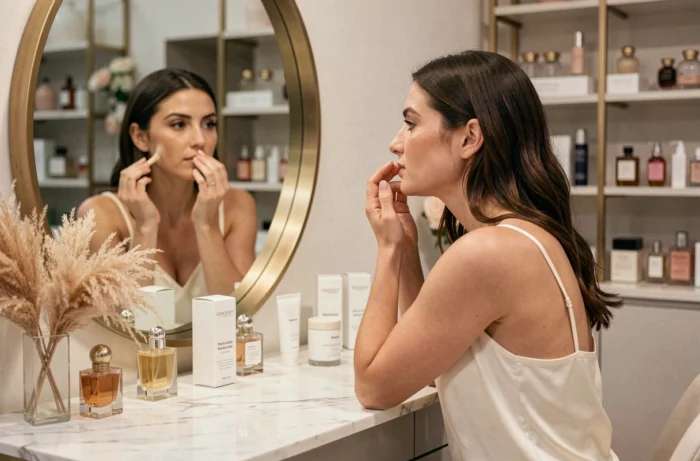
Autumn-Winter 2026 Trends: Comparison of Key Pieces and Dominant Colors
The autumn-winter 2026 fashion shows have revealed clear directions. Here is a comparison of the stylistic axes that stand out this season compared to previous seasons.
| Stylistic Axis | Key Pieces | Associated Colors | Break from 2025 |
|---|---|---|---|
| Structured Silhouettes | Long coat, tailored trousers | Black, anthracite gray, burgundy | Return of volume at the shoulders after two seasons of fluid lines |
| Statement Accessories | Wide belts, raw metal jewelry | Aged gold, matte silver | Less minimalism, more visible pieces |
| Knitwear and Textures | Oversized sweater, XXL scarf | Camel, ecru, rust | Thicker knits, artisanal knitting highlighted |
| Beauty for Skin and Lips | Blush, bronzer, lip liner | Warm tones, plum, terracotta | Targeted makeup rather than uniform coverage |
Structured trousers and long coats dominate the back-to-school looks. In contrast, discreet accessories are losing ground in favor of bolder pieces that anchor the style in a more assertive register.
Blush, Bronzer, and Lip Liner: Makeup Refocuses
The beauty market is polarizing between “little luxury” purchases (fragrance, targeted treatments) and functional value products. Makeup illustrates this shift: blush, bronzer, and lip liner are capturing attention rather than versatile palettes.
This refocus reflects a change in behavior. Consumers are investing in products with precise shades and finishes suited to their complexion, rather than multiplying references. The beauty wardrobe follows the same logic as the fashion wardrobe: fewer pieces, but better chosen.
Fashion Pieces to Prioritize for a Sustainable Autumn Wardrobe
Building a coherent autumn-winter wardrobe relies on a few choices. Pieces that last through several seasons deserve a higher budget than trendy, ephemeral accessories.
- The blended wool coat remains the most worn piece from October to March. Opting for a straight or slightly oversized cut allows it to be paired with both tailored trousers and jeans.
- The pleated trousers, in wide or cigarette versions, replace joggers in mid-season looks. Neutral colors (gray, navy, beige) maximize combinations.
- Thick knits made from natural fibers (wool, alpaca, blended cashmere) are gaining visibility in collections. A well-cut sweater serves as a central piece for several months.
- Round-toe ankle boots with block heels return as a pivot accessory, suitable for both midi skirts and straight trousers.
The idea is not to accumulate, but to select pieces whose versatility justifies the investment. A coat worn for three consecutive winters costs less per use than a trendy model replaced each year.
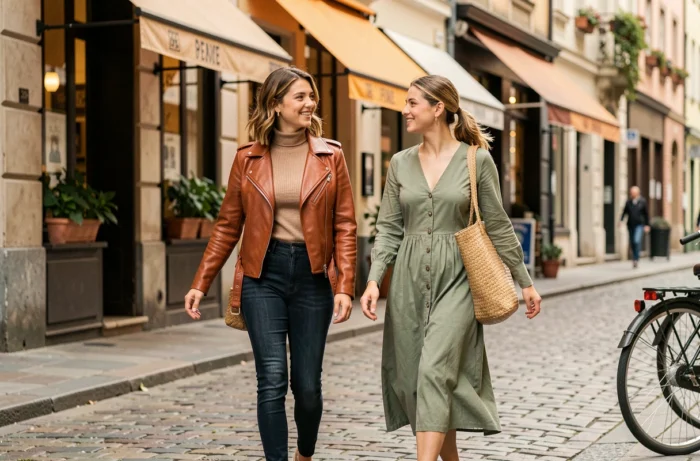
Beauty and Fashion Claims: Adapting Communication Without Losing Attractiveness
The new European obligations pose a concrete question for brands: how to talk about style, naturalness, or commitment without falling under the “green claims” directive?
Three levers emerge for brands that want to remain attractive while respecting the regulatory framework:
- Replace vague terms (“natural,” “clean,” “eco-friendly”) with verifiable mentions linked to a third-party certification recognized by the European Union.
- Adapt cosmetic formulas to regulatory changes regarding ingredients, which sometimes involves reformulating best-sellers without altering their texture or finish.
- Integrate traceability of textile materials into product storytelling: origin of the wool, place of manufacture, percentage of recycled fibers with sourced data.
Brands that document their choices rather than decree them maintain their credibility. The promise of style remains intact when it is based on facts rather than adjectives.
Cosmetic Labeling: A Challenge of Formulation as Much as Marketing
The tightening of cosmetic labeling in Europe does not only concern external communication. The ingredient restrictions currently under review may alter the composition of existing products. A lip liner or blush formulated with a restricted pigment will need to be reformulated, sometimes with a slightly different finish.
For consumers, this means that favorite shades may evolve from season to season, not by creative choice, but by regulatory constraint. Understanding this mechanism helps to put into perspective the range changes announced by certain brands.
The fashion and beauty trends of this autumn-winter 2026 can be read on two levels: that of the colors, pieces, and looks that structure the wardrobe, and that of the rules that redefine what brands can promise. The long coat remains a pillar of style, and makeup refocuses on targeted products.
The European regulation pushes the entire sector towards greater transparency. The next season is being prepared as much in stores as in legislative texts.