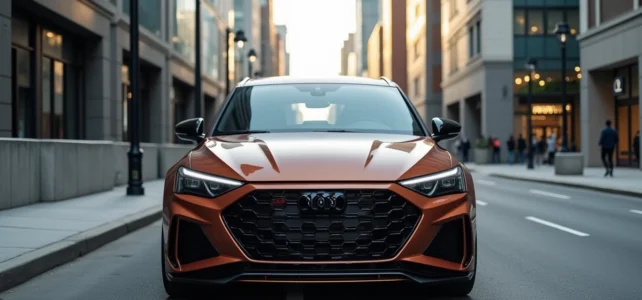
The Cupra Formentor is based on the MQB evo platform from the Volkswagen group, shared with the Seat Leon and the Volkswagen Tiguan. This technical foundation explains both its dynamic qualities and some compromises related to its positioning as a sporty coupe SUV. Between daily urban driving and long highway journeys, the behavior of this model varies significantly depending on the chosen engine and generation.
Chassis and Suspension of the Formentor: What Changes Between Phase 1 and Facelift
The first generation of the Formentor (2020-2024) has often been criticized for its suspensions oriented towards dynamism at the expense of filtering. On degraded road surfaces, the harsh impacts in the cabin were tiring on long journeys. The compromise accepted by Cupra favored stability and steering precision.
The facelift introduced from 2024 has corrected this imbalance. Several road tests report a noticeable improvement in comfort on the highway, with better filtering of irregularities and enhanced sound insulation. Caroom describes the facelifted Formentor as having “quite impressive comfort,” capable of being “at ease everywhere, whether on fast lanes or in the city.”
On trims equipped with adaptive damping (DCC), the difference between Comfort and Sport modes becomes truly noticeable. In Comfort mode, the suspension travel absorbs highway expansion joints without transmitting jarring shocks. In Sport mode, the chassis firms up and the body remains flatter in corners, which aligns with the model’s primary purpose.
To delve deeper into these aspects, Cupra reviews on Pulsion Laval detail the real-world experience on different types of roads.
Behavior of the Cupra Formentor in the City: Steering, Visibility, and Maneuvers
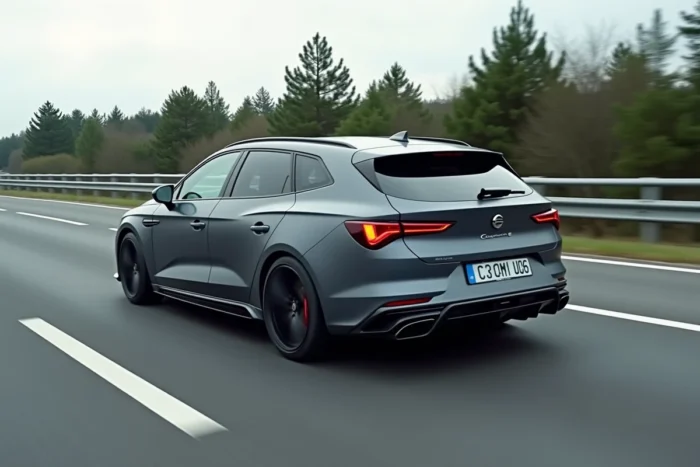
In urban settings, the Formentor benefits from a precise and sufficiently light steering at low speeds for parking and roundabouts. The turning diameter remains reasonable for an SUV in this category, even though the coupe silhouette slightly reduces rear visibility.
Recent versions (from 2025 on certain 1.5 MHEV trims) include features that facilitate urban driving:
- 360° camera to visualize the complete environment of the vehicle during tight parking maneuvers
- Intelligent parking assistant (IPA) capable of managing parallel and perpendicular parking semi-autonomously
- Active blind spot assistant, particularly useful in dense traffic and during lane changes
However, the DSG dual-clutch transmission, present on most engines, shows its limitations in the city. At very low speeds, it can produce slight jolts during the clutch phases between first and second gear. This behavior, characteristic of dual-clutch transmissions in urban traffic, diminishes once the engine is warmed up.
TSI and Plug-in Hybrid Engines: Real Consumption on the Highway
The choice of engine radically transforms the highway experience of the Formentor. The TSI petrol engines (1.5 with 150 hp and 2.0 with 204 to 333 hp) offer strong acceleration and immediate torque availability. The 2.0 TSI paired with the 4Drive all-wheel drive remains the most suitable for fast long-distance travel, with remarkable directional stability beyond 130 km/h.
The plug-in hybrid versions (e-Hybrid with 204 and 272 hp) pose a different question. In the WLTP mixed cycle, the consumption figures seem exemplary. The highway reality is quite different. A long-distance test over 879 km, with a depleted battery, recorded a real consumption of 6.6 l/100 km, significantly above the values announced in the mixed cycle.
This data highlights a structural limitation of PHEVs on the highway: the extra weight from the battery (several hundred additional kilos) penalizes consumption as soon as the internal combustion engine operates alone. The trunk also suffers, with a reduced volume of 345 liters on the plug-in hybrid versions compared to about 450 liters on pure combustion engines.
Which Engine for Which Daily Use
For predominantly urban use with short trips, the PHEV makes perfect sense thanks to a real electric range exceeding 100 km on certain recent versions. The electric mode eliminates the jolts of the DSG and makes city driving particularly smooth.
For drivers covering highway kilometers, the 1.5 TSI micro-hybrid offers the best consumption/pleasure ratio. Less powerful than the 2.0, it proves sufficient for overtaking and maintains reasonable consumption at stabilized speeds.
Seat Comfort and Ergonomics on Long Highway Journeys
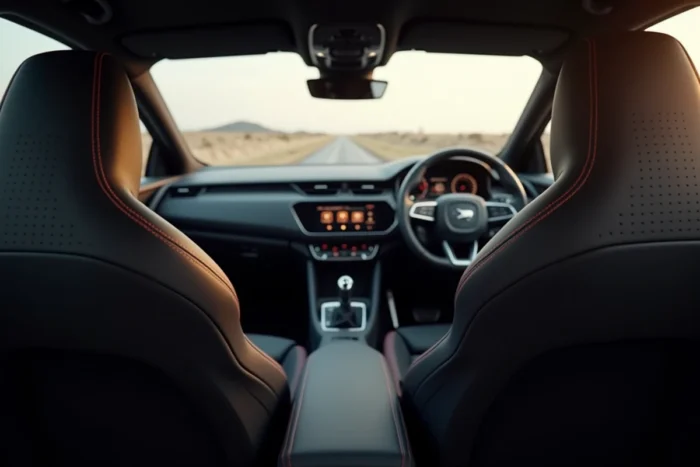
The bucket seats of the Formentor are one of its most universally praised strengths. The lateral support, firm without being constraining, limits fatigue on multi-hour journeys. The low seating position, sporty in style, contributes to the engaging driving sensation but may complicate access to the vehicle for some passengers.
The rear space proves generous for the category, with comfortable legroom for two adults. The central 12.9-inch screen on recent versions centralizes most controls, simplifying navigation and audio system management while driving. The downside: some common adjustments (air conditioning, volume) go through the touchscreen, which diverts attention from the road.
Once mastered, the infotainment system is fluid and responsive. The overall ergonomics require a few days of adaptation, especially to locate the touch shortcuts for the most used functions.
The facelifted Formentor addresses the main criticisms directed at the first generation without renouncing its sporty DNA. The compromise between road holding and filtering of imperfections has found a more mature balance, making this coupe SUV credible for both daily commutes and weekend getaways. The engine choice remains the determining factor: well chosen according to driving habits, it radically changes the relationship to comfort and consumption.