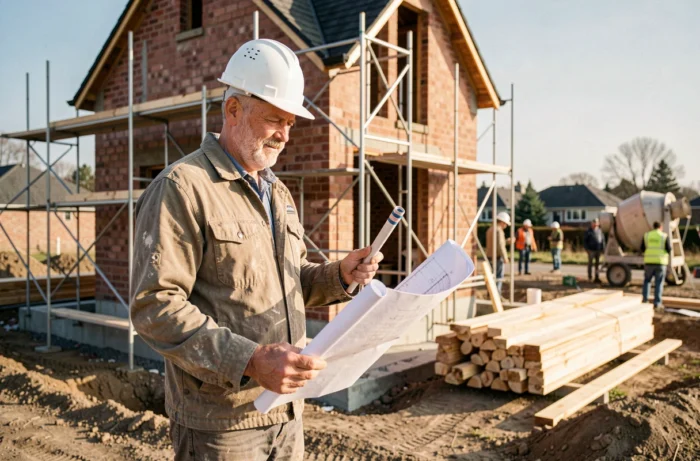
The construction or renovation of a house requires technical decisions at every phase. The carbon threshold for RE2020 has been lowered since 2025, soil constraints, and the choice of low-carbon materials: mistakes can be costly and are difficult to correct once the project is underway. Here are ten practical tips to secure your real estate project, from the date of submitting the building permit to the completion of the work.
1. Align the building permit submission date with RE2020 thresholds

The carbon footprint threshold for materials (Ic construction indicator) for a new single-family home has decreased from approximately 640 kg CO₂eq/m² to 530 kg CO₂eq/m² as of January 1, 2025. This reduction of about 15 to 17% renders certain construction systems non-compliant if the environmental study has not been optimized.
The valid date is that of the permit submission, not the contract signing. Delaying a submission by a few weeks can shift a project into a more stringent framework. We recommend validating the RE2020 study with the thermal engineering office before any administrative steps.
To delve deeper into the specifics related to your house project, you can access the Conseil en Habitat website, which details the procedures by type of construction.
2. Conduct a G2 geotechnical study before choosing foundations
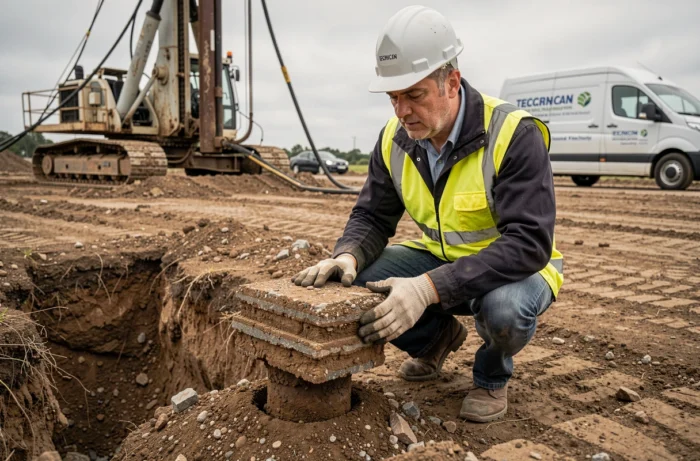
The G1 study provided by the land seller is not sufficient to size the foundations. Only the G2 study (pre-project phase then project) adapts the type of foundation to the actual behavior of the soil: swelling clay, high groundwater table, old fill.
On clayey land subject to shrink-swell, undersized foundations can cause structural cracks within a few years. The cost of a G2 study remains marginal compared to the overall construction budget, and it conditions the ten-year warranty of the builder.
3. Prioritize the thermal envelope before heating equipment
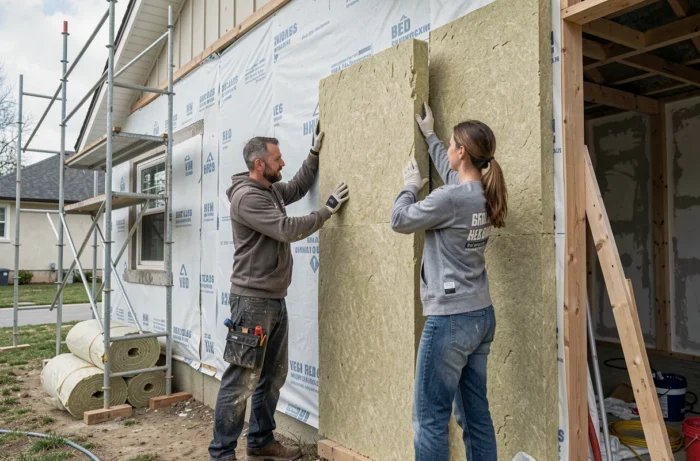
A high-performance pellet stove in a poorly insulated house remains an energy sink. In renovation as in construction, the insulation of walls, roofs, and ground floors must precede the sizing of the heating system.
This sequence has a direct impact on the calibration of the heat pump or boiler. A well-insulated building requires less heating power, which reduces installation costs and annual consumption. Reversing this order often forces the equipment to be oversized, incurring unnecessary costs.
4. Include a 10 to 15% margin in the budget for unforeseen site expenses

No renovation project goes without surprises: discovery of asbestos, old pipes under a slab, weakened framing not visible before removing the roof. Setting aside 10 to 15% of the total budget as a reserve avoids having to make urgent decisions between structural safety and finishing touches.
This margin does not apply to new construction on bare land, where surprises are better controlled. In heavy renovation, it becomes a separate item in the financing plan, to be presented as such to the banker.
5. Check the ten-year and damage insurance before the first pickaxe strike

Damage insurance is mandatory for the project owner. It pre-finances repairs covered by the ten-year warranty without waiting for a court to designate the responsible party. Failing to subscribe exposes you to delays of several years in the event of a serious claim.
We observe that many individuals check the main contractor’s ten-year insurance but forget that of the subcontractors. Each participant in the structural work, framing, or waterproofing must provide their certificate before starting.
6. Respect the logical order of trades in renovation
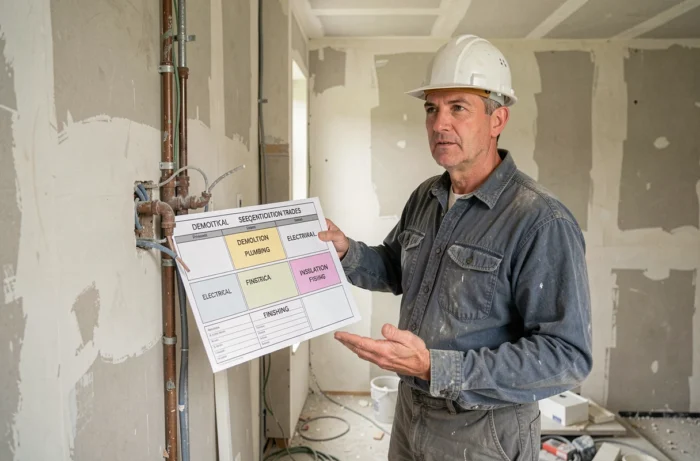
The technical sequence of a renovation site follows a strict logic:
- Demolition and clearing, then structural work and structural repairs
- Passing of networks (electricity, plumbing, ventilation) before closing the partitions
- Thermal and acoustic insulation, then drywall and coverings
- Finishes (painting, flooring, interior joinery) last
Intervening on electricity after the drywall installation leads to costly rework. This phasing also conditions the coordination between trades: an electrician waiting for the drywall installer blocks the entire schedule.
7. Choose low-carbon materials compatible with the 2025 thresholds
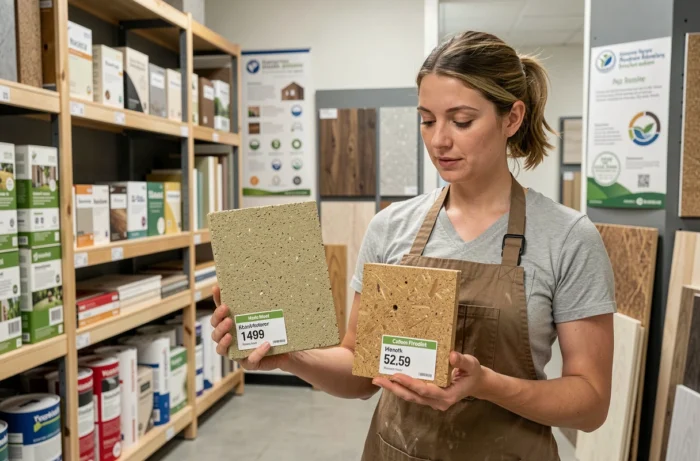
With the new Ic construction threshold at 530 kg CO₂eq/m², the choice of materials directly impacts regulatory compliance. Traditional concrete consumes a significant portion of the carbon budget. Bio-sourced materials (wood, hemp, straw) allow staying below the ceiling while ensuring good thermal inertia.
In renovation, this threshold does not apply directly, but financial aids like MaPrimeRénov’ guide towards high-performance materials. A bio-sourced insulator qualifies for the same grants as a synthetic insulator, with a more favorable environmental balance.
8. Anticipate the DPE classification for an energy renovation project

Properties classified G are banned from rental since 2025, and those classified F will be banned starting in 2028. In renovation, the DPE conditions the work strategy: it is necessary to aim for at least class D to secure the rental value and resale of the property.
Having the DPE done before defining the work program allows targeting the areas to be prioritized. A property classified F with an uninsulated roof and single-glazed windows will gain two classes by addressing these two areas, whereas just updating the heating would only improve one class.
9. Require a contractual schedule with penalties for delays
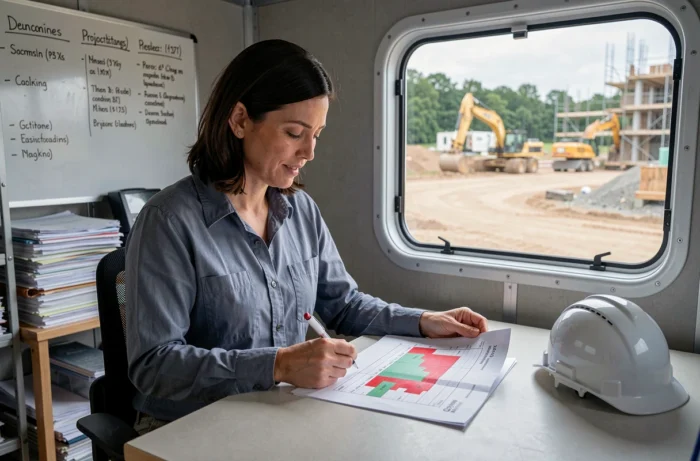
An indicative schedule does not bind anyone. The construction contract (CCMI) or the works contract must mention a firm delivery date with daily penalties for delays. Without this clause, a delay of several months remains without financial recourse.
For a renovation in separate lots, each artisan contract must include its own deadlines. A delay from the mason pushes back the electrician, which in turn delays the drywall installer. The overall contractual schedule, validated by the project manager, coordinates everything and identifies the critical path.
10. Check each reservation during the reception of the work
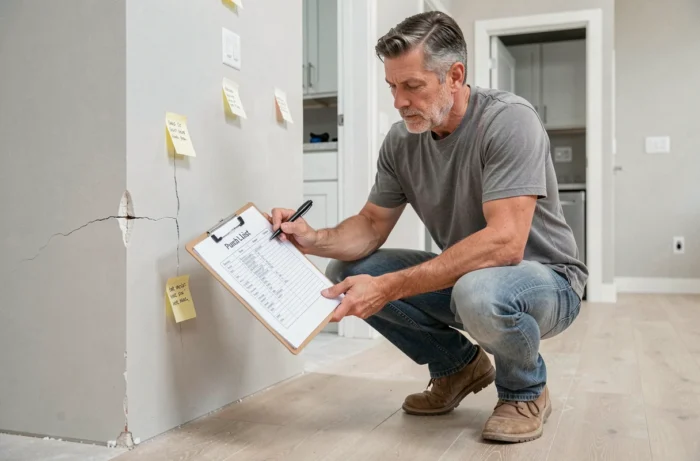
The reception is the legal act that triggers the guarantees (perfect completion, biennial, ten-year). Accepting the reception without reservation on a visible defect forfeits any subsequent recourse on that point.
The perfect completion guarantee gives the professional one year to correct the identified defects. We recommend listing each reservation in writing, with supporting photos, and only signing the report after a thorough inspection of each room, each network, and each exterior work.
A construction or renovation project hinges on the rigor of the upstream steps: regulatory compliance, soil studies, work phasing, insurances. The technical choices made before the project determine both the final budget and the building’s longevity over the following decades.