
The French public devices have been refocusing since 2025-2026 on comprehensive energy renovations. MaPrimeRénov’ and the CEE are increasingly financing isolated actions (a window, a single wall) and favor work bundles combining insulation, heating, and ventilation. For homeowners who want to renovate while limiting their ecological footprint without blowing their budget, this shift changes the game: it is no longer enough to stack isolated interventions.
Energy Performance Diagnosis Reform and Renovation: What Has Changed for Electric Homes
The reform of the energy performance diagnosis has modified the coefficient applied to electricity. As a result: approximately 850,000 homes heated with electricity have exited the status of thermal sieves without any work done.
This reclassification redistributes priorities. A home that moved from G to E due to the new calculation no longer requires heavy insulation to remain rentable. In contrast, buildings heated with gas or oil remain penalized by the DPE, and their owners must consider more substantial work to achieve the same label.
For the affected households, the budgetary question arises differently: should they invest in changing the heating system (heat pump, for example) or concentrate expenses on the building envelope? Field feedback varies, as the answer depends on the actual condition of the home, which the DPE alone does not always describe accurately.
Specialized platforms allow for cross-referencing diagnostics and quotes from certified craftsmen, such as https://refair.fr/, which connects homeowners with professionals in responsible renovation.
Ban on Renting Thermal Sieve Properties: Regulatory Pressure on Renovation Budgets
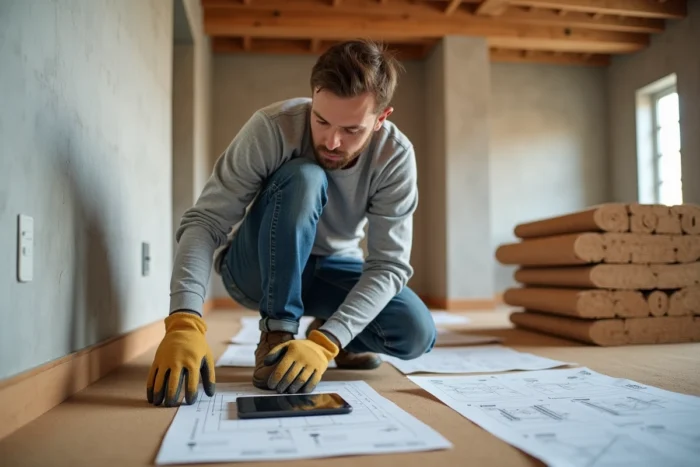
Properties classified G in the DPE are already banned from renting. F-class homes are next in line. This regulatory constraint forces landlord owners to renovate, not out of ecological conviction, but to keep their property on the rental market.
The trap is to aim solely for a label change. A homeowner who insulates their attic to move from F to E without addressing ventilation risks humidity and indoor air quality issues. A renovation designed as a bundle of work protects the building in the long term.
Balancing Energy Performance and Available Budget
There is a strong temptation to break the project into phases to smooth out expenses. However, public aid discourages this approach: the amounts granted for a comprehensive renovation are significantly higher than the sum of aids obtained step by step.
In practical terms, a homeowner who insulates walls, replaces their boiler, and installs a VMC in the same project accesses higher financing ceilings than if they carried out these three interventions over three separate years. Bundling the work reduces the total remaining charge, even if the initial investment seems heavier.
Bio-based Materials in Ecological Renovation: Promises and Limits
Wood fiber, cellulose wadding, hemp, cork: bio-based insulators are gaining ground in renovation projects. Their carbon footprint during manufacturing is lower than that of mineral wools or polystyrene. Their ability to regulate indoor humidity makes them relevant candidates for old stone or rammed earth houses.
The available data do not allow for a conclusion that these materials systematically offer a better performance/price ratio. Their cost per square meter often remains higher than that of conventional insulators, and availability varies by region.
- Flexible wood fiber: suitable for attics and sloped roofs, good summer thermal inertia, but the necessary thickness is greater than that of a synthetic insulator for equivalent thermal resistance.
- Loose cellulose wadding: competitively priced among bio-based materials, effective when blown into framed walls, requires a properly installed vapor barrier to prevent settling over time.
- Expanded cork: moisture-resistant, suitable for basements and exterior facades, but its price often limits it to targeted areas rather than complete insulation.
The choice of material is not made solely based on the “ecological” label. Compatibility with the existing building determines the actual durability of the insulation. Installing an unsuitable vapor barrier on a stone wall that needs to breathe can cause destructive condensation in just a few years.

Ventilation and Sealing: The Overlooked Aspect of Low-Budget Renovations
Insulating without properly ventilating turns a home into an airtight box where humidity accumulates. Controlled mechanical ventilation with double flow recovers heat from the extracted air to preheat the incoming air. Its installation cost hinders many projects, but a double flow VMC can significantly reduce heating needs in a well-insulated house.
For tight budgets, a hygroscopic single flow VMC represents an acceptable compromise. It adjusts the airflow to the humidity level detected in each room, which limits thermal losses compared to a fixed flow permanent extraction.
Testing Sealing Before and After Work
An infiltrometry test (blower door) conducted before the work identifies unwanted air leaks: joinery joints, duct passages, wall-floor connections. Conducted after the work, it validates the quality of the implementation. This test costs a few hundred euros and can prevent unnecessary heating expenses for years.
Homeowners who renovate with the budget in mind tend to eliminate this aspect. In contrast, those aiming for overall performance integrate it from the start. Air sealing conditions the actual effectiveness of all other work. Without it, even the most efficient insulation loses part of its effect due to untreated infiltrations.
Renovating while preserving the environment and budget requires accepting a global project logic rather than a series of patches. Public aids are now clearly directing towards this approach, and regulatory pressure on thermal sieves is accelerating the movement. The most virtuous bio-based material remains the one that is compatible with the wall it protects.