
The string trimmer is a finishing tool whose performance depends as much on the choice of cutting system as on the operator’s technique. We regularly observe that models suited to the terrain are underutilized due to incorrect settings, or that oversized devices complicate the maintenance of small gardens.
Wire diameter and cutting head: the parameters that determine finishing quality
The majority of guides focus on the motorization. However, the most determining factor for the sharpness of the result remains the torque formed by the wire diameter and the type of head.
A thin round wire is suitable for fine grasses along paths and flower beds. For dense or semi-woody grasses along hedges, a square or serrated wire of a larger section cuts without shredding the stems. Using a wire that is too thin on thick vegetation causes rapid fraying and uneven results.
The cutting heads are divided into three families:
- Semi-automatic wire head (tap-and-go): the most common, it releases wire when the head is struck against the ground. Convenient but prone to jams if the wire is poorly wound on the spool.
- Automatic wire head: the wire advances by centrifugal force. Fewer interruptions, but higher wire consumption.
- Plastic blade head: suitable for tall grasses and neglected edges. It offers a clean cut, at the cost of frequent blade replacements.
We recommend checking the compatibility of consumables before purchase. Some manufacturers impose proprietary spools, which increases long-term maintenance costs. The resources available on taille-bordure-warrior.com allow for comparing cutting systems by model and identifying compatibilities between brands.
Battery or corded electric trimmer: decide based on garden configuration
The choice between battery and corded is not just a matter of comfort. It involves the available power, autonomy, and weight of the device, three parameters that condition the cutting action.
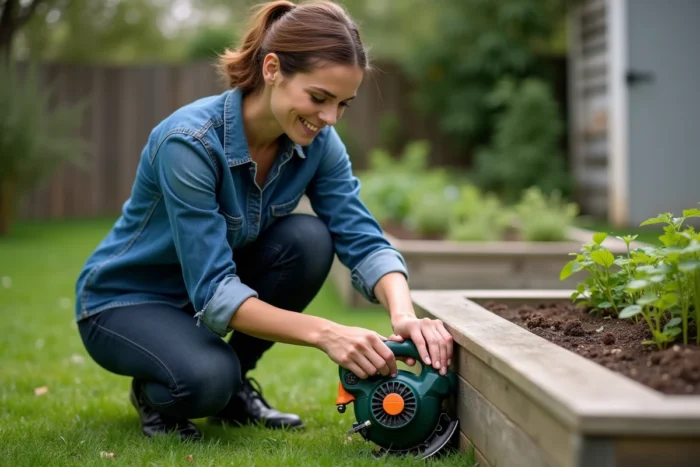
A corded model delivers constant power, without degradation over the session. For a modest-sized garden where an outdoor outlet is accessible, it is the most reliable and least expensive solution to purchase. The constraint of the cable remains real: it imposes a limited working radius and requires constant vigilance to avoid cutting the extension cord.
Battery-powered trimmers have made significant progress. The current trend is moving towards abandoning gas-powered models, accelerated by rising fuel costs and noise restrictions in certain municipalities. A recent lithium-ion battery device offers sufficient autonomy for most residential gardens, with a significantly lower noise level.
The gas-powered option still holds interest for very large plots or overgrown land where raw power and endurance are paramount. For regular maintenance of lawn edges, a battery model covers almost all the needs of a standard garden.
Noise regulations and hours: a selection criterion often overlooked
Before choosing a string trimmer, we advise consulting your municipality’s municipal order. Local regulations strictly govern the hours of use for motorized gardening equipment, and there are penalties for non-compliance.
The municipality of Morainvilliers-Bures, for example, reminds in its municipal guide that all excessive noise related to gardening is targeted and subject to specific time slots. This type of restriction is widespread in residential areas, with allowed time frames varying from one municipality to another (often limited in the evening, on Sundays, and public holidays).
This point has a direct impact on the choice of equipment. A gas-powered trimmer generates a noise level much higher than an electric or battery model. In dense housing developments, opting for a quiet device expands the usable time frame and reduces neighborhood conflicts.
Cutting technique with a string trimmer: gesture and angle for a clean result
A good tool used poorly yields mediocre results. The technique is based on three simple principles that are rarely mastered.
Incline the head between 60 and 90 degrees relative to the ground depending on the desired effect. In a nearly vertical position, the wire cuts the edge of the lawn and creates a clean line along the paths (edging function). In a horizontal position, it shaves the surface like a miniature mower.
The direction of sweeping also matters. Working from right to left projects debris towards the already mowed area, making cleanup easier. Reversing the movement sends the cut grass into the flower bed or onto the path.
- Maintain a consistent cutting height by using the protective guard as a visual guide close to the ground.
- Do not push the wire into the ground: this wears it out prematurely and tears roots instead of cutting stems.
- Progress slowly on overgrown edges rather than forcing, to avoid stalling the motor or breaking the wire.
- Wear safety glasses and closed shoes: flying rocks and debris are the leading cause of injury with this tool.
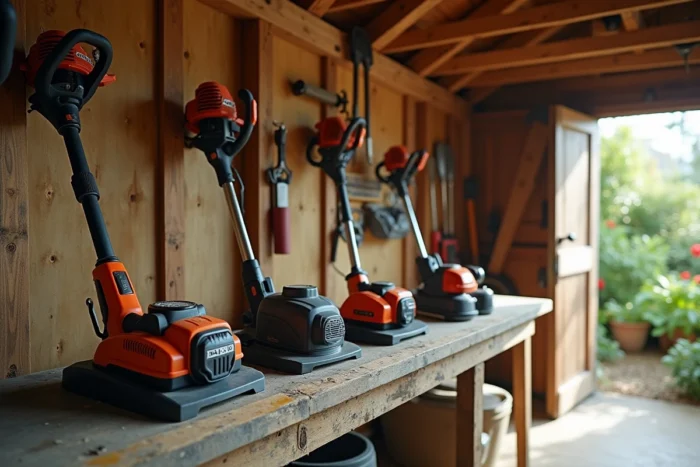
Maintenance of the string trimmer: prolonging the device’s lifespan
A well-maintained string trimmer retains its cutting performance over several seasons. Cleaning the guard and head after each use prevents the accumulation of sap and plant residues that can eventually jam the wire exit mechanism.
For battery models, storing the battery at half charge in a dry, temperate place preserves the capacity of the lithium-ion cells. Leaving a completely discharged battery for several weeks reduces its lifespan irreversibly.
Replace the wire or plastic blades as soon as the cut becomes uneven. A worn consumable puts more strain on the motor and degrades the quality of the finish. Keeping a spare spool on hand helps avoid interruptions during a session.
Choosing a string trimmer suitable for the size of the garden, the type of vegetation, and local noise constraints makes all the difference between tedious maintenance and clean edges achieved in just a few controlled passes. It is better to invest in a model compatible with standard consumables than in a powerful device that is costly to supply with proprietary wire.