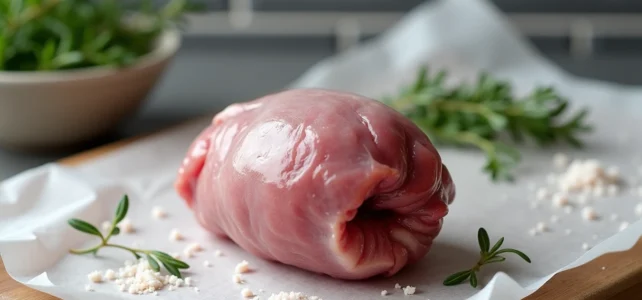
The sheep testicle, also known as sheep testicle, belongs to the offal family. Like all offal, it is characterized by a significantly higher water and enzyme content compared to muscle meat. This composition alters its behavior when frozen and shortens its shelf life in the freezer compared to a leg or shoulder.
Why offal like sheep testicles freeze differently than meat
A piece of muscle meat (shoulder, chop, leg) has a dense fibrous structure. The fibers retain water relatively stably during freezing, which limits texture degradation over long periods.
The sheep testicle has a much more fragile structure. Its richness in free water and enzymes accelerates degradation reactions, even at low temperatures. The concrete result: the texture and flavor degrade faster than for a classic muscle.
Several food safety agencies recommend not exceeding a few months of freezing for offal, whereas muscle sheep meat remains acceptable for much longer depending on storage conditions. This gap, rarely mentioned in general guides, changes how one should plan the purchase and consumption of this product. For more information on matingourmand.fr, a detailed guide addresses the issue of optimal duration and conditions.
Preparing sheep testicles before freezing
The quality of the product after thawing largely depends on what happens before it goes into the freezer. Freezing poorly prepared offal also freezes the bacteria and texture defects.
Cleaning and trimming
Remove the outer membrane (the tunic) if it is still present. Rinse the testicles in cold water to eliminate any trace of residual blood. Careful trimming reduces the surface bacterial load and improves freezing quality.
Portioning and packaging
Cut into portions suitable for single use. Refreezing thawed offal is to be avoided, as the risk of bacterial proliferation significantly increases with each temperature cycle.
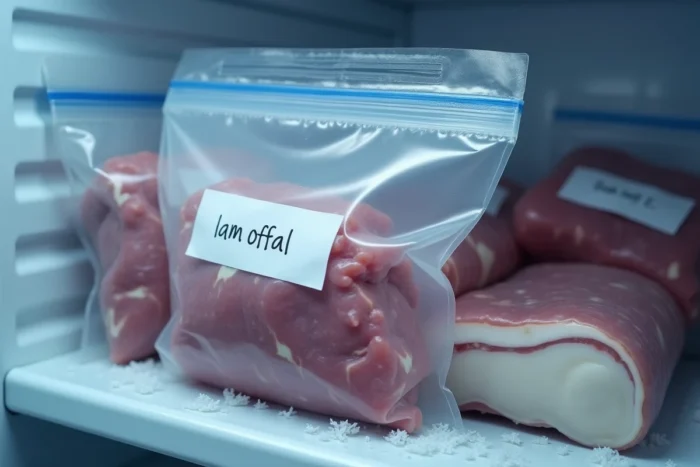
- Wrap each portion in airtight cling film, removing as much air as possible from contact with the product
- Then place the wrapped portion in a tightly sealed freezer bag, or use vacuum sealing if you have the device
- Label with the freezing date and the nature of the product, to avoid confusing it with other offal once frozen
Vacuum packaging remains the best protection against freezer burn (those white or gray spots that appear when air dehydrates the surface). On a water-rich offal like sheep testicle, freezer burn irreversibly alters the texture.
Optimal shelf life in the freezer
The shelf life depends on the effective temperature of the freezer and the quality of the packaging. A domestic freezer maintained at a sufficiently low temperature (three-star category or higher) offers the minimum conditions for proper preservation.
For sheep testicles, the recommended duration does not exceed a few months. Beyond that, the loss of taste quality and texture degradation become noticeable, even if the product remains technically consumable from a health perspective.
Two factors accelerate degradation:
- Temperature fluctuations in the freezer (frequent door openings, appliance undersized for the stored quantity)
- A non-airtight package that allows air to reach the surface of the product
- A product that was not perfectly fresh at the time of freezing, which shortens the quality window
Conversely, a product purchased the same day from the butcher, trimmed, vacuum-packed, and placed in a stable freezer is preserved under good conditions for the entire recommended duration.
Thawing sheep testicles: method and mistakes to avoid
Thawing is the time when most errors occur, and where food risk is highest. Offal, due to its high water content, releases a lot of liquid when thawing. This juice creates a favorable environment for bacterial growth.
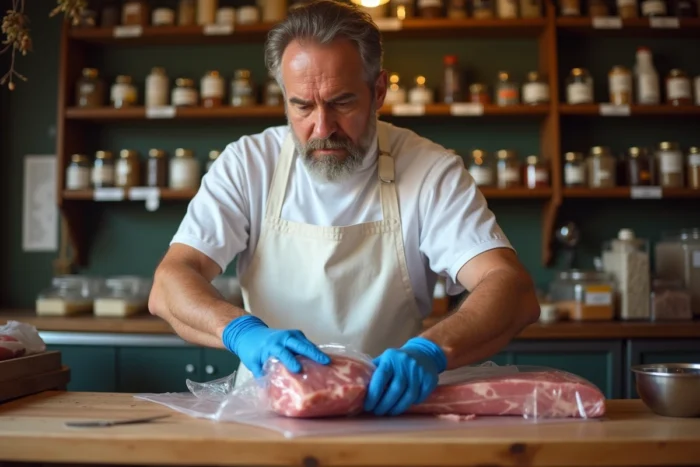
The only recommended method is slow thawing in the refrigerator. Place the portion in a container to catch the thawing liquid, and allow a full night for a standard-sized piece.
Thawing at room temperature or in hot water keeps the product in the temperature zone where bacteria multiply rapidly for too long. For offal like sheep testicles, this risk is amplified by the amount of water released.
After thawing
Cook the product within hours of finishing the thawing process. Never refreeze raw thawed offal. However, a cooked dish made with sheep testicles (prepared after thawing) can be refrozen once, provided it has been cooked thoroughly and cooled quickly.
Freezing already cooked sheep testicles
Freezing the product after cooking offers an interesting alternative. Cooking reduces the enzymatic load and stabilizes the texture, which improves the product’s stability in the freezer.
Pan-fried, braised, or sauce-integrated sheep testicles freeze well after cooking. Allow the dish to cool at room temperature for a limited time, then place it in the refrigerator before transferring it to the freezer. This two-step cooling prevents raising the internal temperature of the appliance.
The shelf life of a frozen cooked dish also remains a few months for satisfactory taste results. Portion before freezing to avoid thawing more than you will consume.
Sheep testicles remain a delicate food product that does not tolerate storage approximations. Airtight packaging, quick freezing after purchase or cooking, and controlled thawing in the refrigerator are the three non-negotiable conditions to preserve both the taste quality and the safety of the product.